
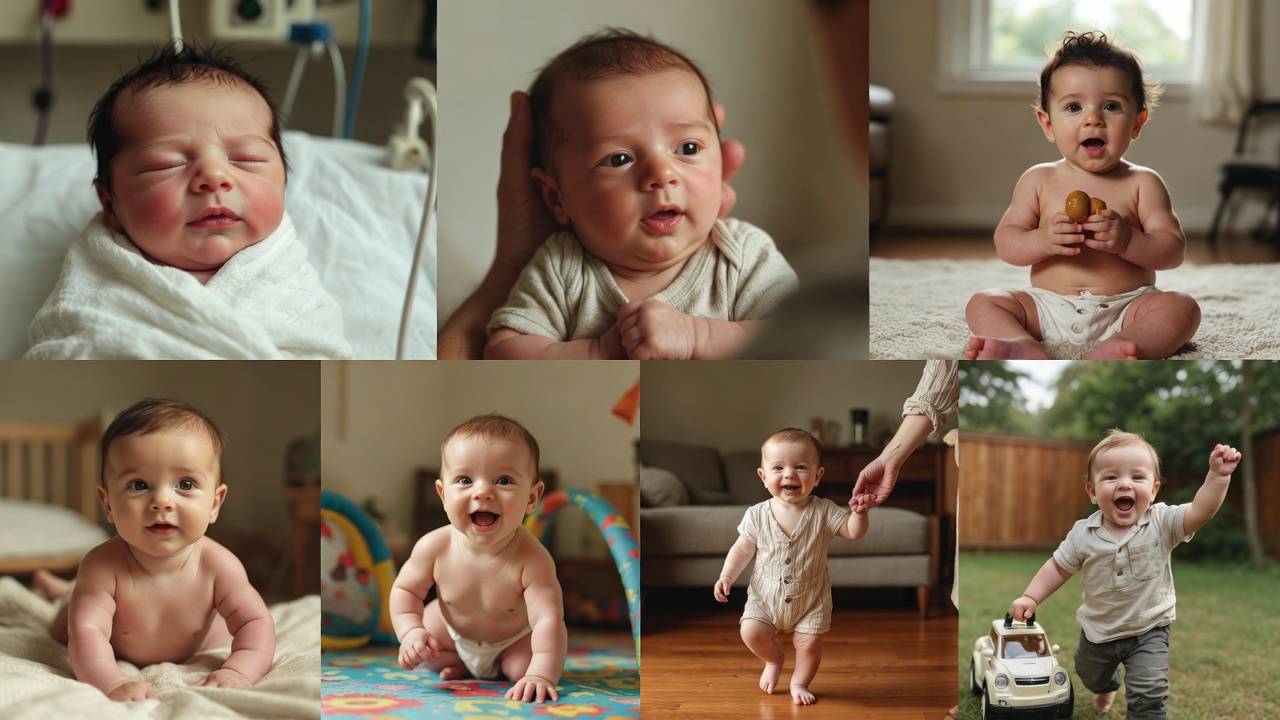
Developmental Milestones: First Months to Two Years
From the first smile to the first steps, the developmental milestones in the first two years of life mark unforgettable moments for parents and are key indicators of a baby's healthy growth. From the perspective of a child development specialist, we explore how these milestones unfold.
The Smile and First Emotional Connection
One of the first signs of a baby's connection to their environment is their smile. Typically, babies begin smiling around six weeks in response to stimuli such as their parents' voice or face. This gesture, although seemingly simple, is an important indicator of emotional development.
As the months progress, these smiles become more frequent and specific, signaling that the baby is recognizing and responding to their surroundings. Smiling fosters emotional bonding and strengthens the connection between the baby and their caregivers.
Head Control and Physical Strengthening
During the first three months, babies work on strengthening their neck muscles. Initially, they need support to hold up their head, but over time, they begin lifting it briefly during tummy time.
Supervised “tummy time” is essential for developing the muscle strength needed for milestones like rolling over and crawling. This stage also helps prevent skull flattening.
Discovering Their Hands and Environment
Around three to five months, babies begin exploring their hands and the world around them. They reach for objects and observe how their actions elicit responses. This interest in manipulating objects signals healthy cognitive development.
Parents can stimulate this stage by providing safe toys with various textures that encourage curiosity and hand-eye coordination.
Rolling and Sitting: Preparing for Movement
Between four and seven months, babies start rolling from side to side, indicating stronger muscles and greater body control. Rolling also prepares them for sitting and crawling.
By six to seven months, most babies can sit with support and soon begin sitting independently. Sitting allows them to explore their surroundings from a new perspective.
Crawling and the Desire to Explore
Crawling typically develops between seven and ten months, although some babies may use alternative forms of movement, such as scooting or pushing with their hands and feet. Crawling is a sign of independence and curiosity about the world.
Creating a safe space where the baby can move freely and placing toys within reach can encourage crawling.
First Words: Communication and Expression
Between nine and twelve months, babies start saying their first meaningful words, such as "mama" or "dada." This milestone represents progress in communication and emotional and social development.
Talking to the baby, reading stories, and responding to their babbling are effective ways to foster language development.
First Steps: Transitioning to Independence
By twelve to fifteen months, many babies take their first steps. This achievement is often preceded by months of practice, such as pulling up on furniture or walking with support.
Parents should celebrate these advances without pressuring the baby, as each child develops at their own pace. Ensure the environment is safe for exploration.
Cognitive Development: Problem-Solving
Between twelve and eighteen months, babies develop important cognitive skills like problem-solving. They may try to fit blocks together, open containers, and experiment with cause and effect.
Interactive toys and activities that stimulate curiosity are ideal for this stage. Learning during this period relies on exploration and repetition.
Socialization and Play
By eighteen to twenty-four months, social development becomes more evident. Toddlers begin interacting with other children, although parallel play (playing alongside others but not with them) is still common.
This is a good time to encourage group activities in a safe and supervised environment. Parents can also model positive social behaviors.
The Language Explosion
Around two years old, many children experience a significant increase in vocabulary. They start combining words into simple sentences and expressing desires or emotions.
Continuing to encourage communication by talking to them, repeating words, and being patient helps develop these skills.
Empathy and Emotions
By two years old, children begin showing empathy, such as comforting a friend or sharing a toy. This period is also marked by intense emotions, which can lead to tantrums.
Parents should help children name and regulate their emotions by showing understanding and setting clear boundaries.
These early years are a unique phase filled with learning and discoveries. Supporting a baby with love, patience, and proper stimulation is key to their holistic development.
Celebrate your baby's first moments
Design a personalized certificate that will be kept as a lifetime memory. Easy, fast and with unique designs.
Thousands of families already love it